
2026-05-12 · auto, shopping
Updated: 2026-07-09
By InsuraFAQ Editorial Team · Reviewed for accuracy
Best Auto Insurance Companies
At a glance
- How to choose: Compare on coverage fit, service, and price — not price alone.
- Financial strength: Look for AM Best A- or better so the carrier can pay claims after large events.
- Service signal: Use the NAIC complaint index and J.D. Power Auto Insurance Study to gauge claims experience.
- Coverage flexibility: Adjust limits, deductibles, and add-ons to your driver profile.
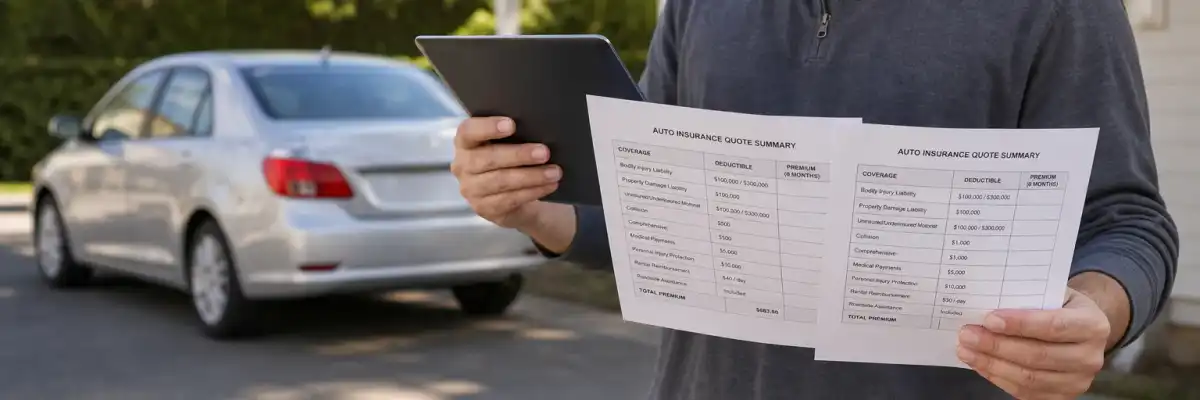
- Shopper move: Run three quotes with identical limits, deductibles, and endorsements; capture both six- and twelve-month premiums to catch teaser rates.
Overview
The best auto insurer is the one that fits your driver profile, coverage needs, and claims expectations. Use a consistent checklist instead of chasing the lowest price alone.
What to compare
- Coverage flexibility: ability to adjust limits, deductibles, and add-ons.
- Discounts: safe driver, bundling, low mileage, and telematics options.
- Claims experience: customer satisfaction and claims response time.
- Financial strength: ability to pay claims after large events.
Fit by driver profile
- New drivers: prioritize education discounts and flexible deductibles.
- High-risk drivers: look for SR-22 support and forgiveness programs.
- Low-mileage drivers: usage-based or pay-per-mile options can help.
- Military families: confirm deployment and storage discounts.
- Rideshare and delivery drivers: confirm the carrier offers a rideshare or delivery endorsement, since personal auto policies exclude driving for pay under the livery clause.
- Drivers with significant assets to protect: confirm the carrier writes an umbrella policy that stacks on top of your auto liability limits — typically $150–$300 per year for the first $1M of additional coverage.
Next steps
Create three comparable quotes with the same limits, then choose the carrier that balances price with coverage quality.
How to build a fair carrier comparison
- Lock the same coverage limits, deductibles, and endorsements across every quote. Quotes are only comparable when the inputs match. See how to compare insurance quotes for a step-by-step walkthrough.
- Request quotes with identical driver, vehicle, and garaging information so rating variables do not skew results.
- Capture each carrier’s six-month and twelve-month premium. Some carriers front-load discounts that disappear at renewal.
- Score three dimensions, not just price: premium, claims reputation (J.D. Power or the NAIC complaint index), and financial strength (AM Best A- or better).
What to have ready before you request quotes
- Current declarations page showing liability, collision, comprehensive, UM/UIM, medical payments/PIP, and any endorsements.
- Driver information: license number, date of birth, years licensed, and accidents or violations in the last 3 to 5 years.
- Vehicle details: VIN, annual mileage, primary use, garaging address, and whether it is financed or leased.
- Any prior coverage lapse, SR-22 requirement, or at-fault claim history.
- Existing discounts you want to verify: multi-policy, good student, defensive driving, telematics, paid-in-full, paperless.
Common mistakes when comparing carriers
- Comparing minimum-limit quotes to higher-limit quotes and assuming the cheaper one is the better deal.
- Ignoring uninsured/underinsured motorist coverage limits, which are often the difference between a real recovery and an unpaid medical bill when an uninsured driver hits you.
- Dropping collision or comprehensive without checking whether a lender still requires it.
- Skipping the NAIC complaint index and J.D. Power claims satisfaction scores, which are free and signal claims experience better than marketing.
- Accepting teaser rates without confirming the renewal premium, which is where many “cheap” carriers get expensive.
When to re-shop your auto policy
- At every renewal, run three fresh quotes with identical limits to your current policy.
- After any life change that moves you into a new rating tier: marriage, a new address, a new vehicle, adding a teen driver, or paying off a loan.
- After a surcharge rolls off (typically 3 years for most violations, 5 years for some at-fault accidents).
- If your telematics program is ending or your discount tier is changing.
- Any time your current carrier raises the rate by more than general inflation at renewal. When you do switch, follow the guidance on switching carriers without a gap so you stay continuously covered.