
By the InsuraFAQ Editorial Team · Reviewed for accuracy
2026-04-14 · blog, home, specialty
Updated: 2026-07-14
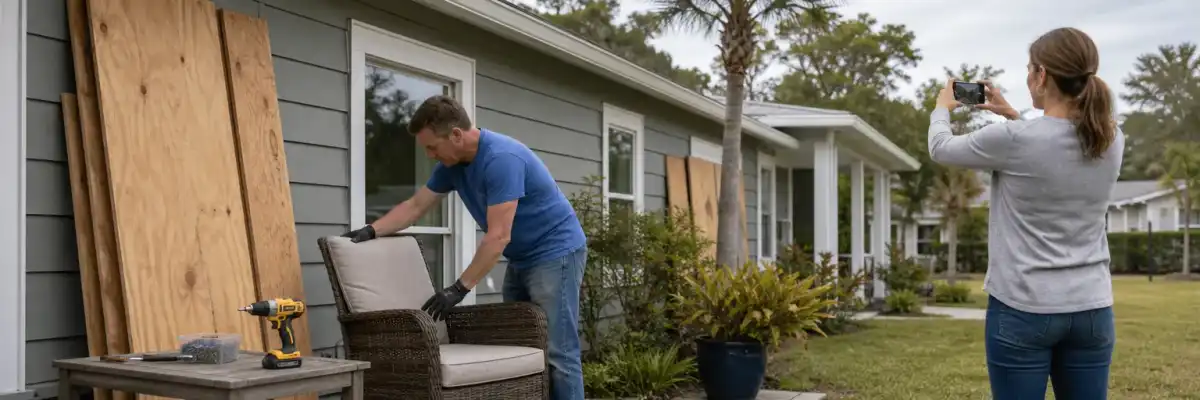
Hurricane Season Insurance Checklist for 2026
The 2026 Atlantic hurricane season is now active (it officially opened June 1). If you live in a hurricane-exposed state and haven’t lined up coverage yet, the single highest-priority item on the checklist below is your flood policy: the National Flood Insurance Program (NFIP) has a standard 30-day waiting period, which means a policy bought during a named storm in the forecast cone will not pay out for that storm.
Atlantic hurricane season runs from June 1 through November 30, with peak activity typically in late summer and early fall. Most of the financial damage from a hurricane is preventable if your insurance is in order before a storm forms. Waiting until a named storm is on the map is usually too late, both because insurers commonly stop writing new policies once a system is in the forecast cone and because flood insurance has a standard 30 day waiting period.
That means the right window for most households is April and early May. If you act now, you have time to review your homeowners or renters policy, add or renew flood insurance, and get your documents in order before peak season arrives.
At a glance
Atlantic hurricane season runs June 1 through November 30, with peak activity in late summer and early fall. Standard homeowners and renters policies generally cover wind damage but exclude flood from storm surge or rainfall, so flood risk needs a separate NFIP or private policy — and NFIP’s standard 30 day waiting period means buying it well before a storm enters the forecast cone. Many coastal states apply a separate percentage-based hurricane or named-storm deductible. Photograph every room, save your declarations page, and keep your insurer’s claim hotline reachable without power.
What standard homeowners and renters policies do (and do not) cover for hurricanes
Hurricane damage comes from two main sources: wind and water. Standard homeowners insurance and renters insurance policies generally cover wind damage to the structure and to covered personal property. That includes roof damage from high winds, broken windows from flying debris, and interior damage that results from wind-driven openings in the building.
What those same policies generally do not cover is flood damage from storm surge or heavy rainfall. Flood is excluded from almost every standard home and renters policy, and that exclusion applies even when the flooding is caused by a hurricane. To cover flood risk you need either a separate policy through the National Flood Insurance Program (NFIP) or a private flood policy. If you are in a coastal, low-lying, or hurricane-exposed area, a conversation about flood insurance should be part of every pre-season review.
Understand your hurricane and windstorm deductible
Many coastal states allow insurers to apply a separate hurricane or named-storm deductible that is calculated as a percentage of the dwelling coverage limit rather than a flat dollar amount. These deductibles commonly appear in states including Florida, Texas, Louisiana, Mississippi, Alabama, Georgia, South Carolina, North Carolina, and Virginia, though the rules and triggers vary by state and insurer.
The math matters. As a worked example, a 5 percent hurricane deductible on a $400,000 dwelling limit means $20,000 out of pocket before your homeowners policy begins to pay for covered hurricane damage. A 2 percent deductible on that same dwelling limit is $8,000 out of pocket. These are illustrative numbers, not quotes. The exact figures depend on your policy, your state, and your insurer, but the concept is the same: a percentage-based deductible can be much larger than a typical flat deductible, and you should know your number before a storm arrives.
Check your declarations page for any separate hurricane, named-storm, or windstorm deductible. If you are unsure how deductibles interact with your coverage, our deductible explainer walks through how these figures work in a claim.
The 30 day flood waiting period
Most new NFIP flood policies include a standard 30 day waiting period before coverage takes effect. The waiting period usually applies even in advance of a named storm, which is why insurers and floodplain managers consistently urge homeowners and renters to buy flood coverage well before hurricane season rather than at the first forecast. There are narrow exceptions tied to lender-required coverage at closing, but the default is 30 days.
The practical takeaway: if you want an NFIP flood policy in force before the statistical peak of hurricane season, early May is the effective deadline. Waiting until late May or June usually means the policy will not fully cover a storm that forms early in the season.
Pre-season checklist
- Verify your homeowners or renters policy is current and that your dwelling limit reflects today’s rebuild cost, not the cost from several years ago.
- Confirm whether your policy has a separate hurricane, named-storm, or windstorm deductible, and run the math on what that means for your specific dwelling limit.
- Buy or renew flood insurance now so any new policy clears the 30 day waiting period before peak season.
- Ask your insurer about additional living expense (loss of use) coverage, how much your policy pays per day or per month, and how long it lasts.
- Photograph or video every room, every closet, and the exterior of the home from multiple angles. Include the roof, outbuildings, fencing, and landscaping. Keep digital copies off-site or in cloud storage.
- Gather and digitize key documents including your declarations page, deed or lease, insurance contact numbers, prescription list, and any warranties for major items.
- Update your inventory of high-value items (jewelry, firearms, art, electronics) and confirm your policy’s sublimits for those categories are adequate. You may need a scheduled personal property endorsement for certain items.
- Check that automatic payments on your insurance are active so the policy does not lapse during the season for a missed bill.
- Review your auto policy’s comprehensive coverage if you may need to evacuate. Comprehensive is what covers flood and storm damage to a vehicle.
- Save your insurer’s claim hotline and your agent’s direct number to your phone contacts so you can reach them even if your home is without power or internet.
What to do during a storm watch or warning
- Secure or bring in outdoor furniture, grills, planters, and anything else that can become airborne.
- Take fresh photos and short videos of the home, yard, and vehicles just before the storm so you have timestamped proof of pre-storm condition.
- Move valuables, important documents, and electronics to higher floors if flooding is possible.
- Charge devices, back up photos and documents to the cloud, and print one paper copy of your insurance declarations page and claim hotline in case you lose power.
Filing a claim after the storm
- Document all damage with photos and video before any cleanup. Wide shots and close-ups help adjusters understand the scope.
- Make reasonable temporary repairs to prevent further damage (tarping a roof, boarding a broken window, removing standing water). Keep every receipt. Most policies expect you to mitigate damage and will reimburse reasonable temporary repair costs.
- File the claim with your insurer as quickly as possible. Large storms create heavy claim volume, and early filers are typically scheduled with adjusters sooner.
- Ask whether your policy has a deadline for submitting a sworn proof of loss and put that date on your calendar.
- Keep a written log of every conversation with your insurer, including the date, the person you spoke with, and what was agreed.
For a detailed walkthrough, see our guide on filing a home insurance claim step by step and our dedicated piece on wind damage claims.
When to consider a public adjuster or appeal
Complex or large hurricane claims sometimes warrant outside help. If your claim is denied, underpaid, or stalled, you generally have the right to appeal within your insurer’s internal process and, if needed, to your state’s department of insurance. Our guide to claims denial appeals explains how the appeal process typically works and what documentation strengthens your case.
The bottom line
Hurricane preparation is a financial exercise as much as a physical one. The readers who come out of a storm in the best shape are the ones who reviewed their policy early, bought flood insurance before the 30 day window closed, and documented their home before the wind picked up.
Take 30 to 60 minutes this week to work through the checklist above. Review your coverage, buy flood early, photograph everything, and save your insurer’s contact information where you can reach it even without power or internet.
Sources
- NOAA National Hurricane Center, Atlantic hurricane season outlook and preparedness information
- FEMA and the National Flood Insurance Program (NFIP), including floodsmart.gov guidance on the 30 day waiting period and flood coverage basics
- Insurance Information Institute, hurricane and windstorm deductible guidance and homeowners coverage basics
- National Association of Insurance Commissioners (NAIC), consumer guidance on home inventories, policy review, and claims
- State insurance department resources in hurricane-exposed states for state-specific deductible and policy rules