
2026-05-16 · specialty, aviation
Updated: 2026-06-12
By InsuraFAQ Editorial Team · Reviewed for accuracy
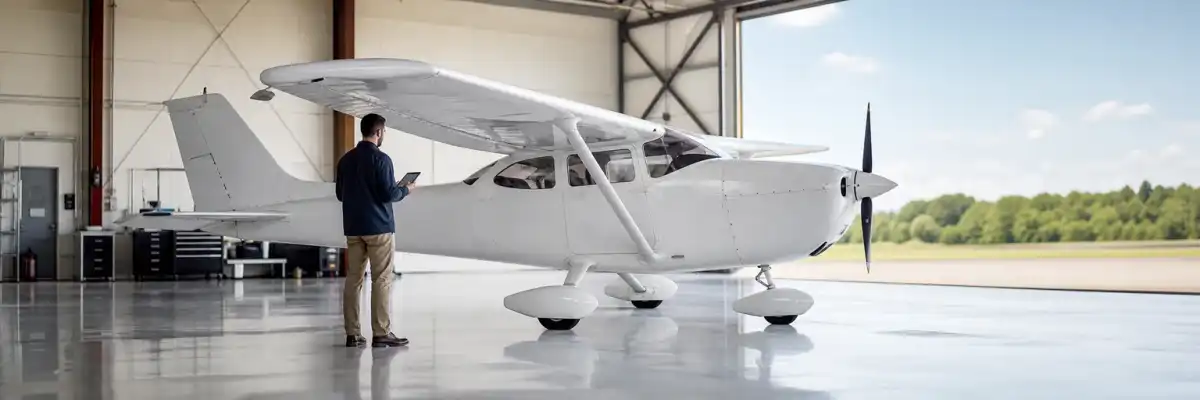
Aviation Coverage
Aviation insurance for a typical private single-engine piston aircraft commonly runs $1,200 to $2,500 per year for combined hull and liability coverage, though premiums swing widely based on aircraft value, pilot hours, intended use, and where the aircraft is hangared. Twin-engine, turbine, and commercial-use aircraft cost meaningfully more, while drone and light-sport policies can come in for a few hundred dollars a year.
Aviation insurance: at a glance
Aviation insurance covers physical damage to aircraft (hull), third-party bodily injury and property damage (aviation liability), passenger injuries, and ground-handling exposures like hangarkeepers liability. A typical private single-engine piston aircraft commonly runs $1,200 to $2,500 per year for combined hull and liability; twin-engine, turbine, and commercial-use aircraft cost meaningfully more, while drone and light-sport policies can come in for a few hundred dollars a year. Premiums move with aircraft value, pilot hours and ratings, intended use, and where the aircraft is hangared.
Overview
Aviation insurance protects aircraft owners, pilots, operators, and related businesses from financial losses tied to aviation incidents. Policies can cover physical damage to aircraft (hull), liability for injuries or property damage, and specialized risks like hangarkeepers liability or passenger coverage, depending on how and where the aircraft is used.
Core coverages
- Hull coverage: pays to repair or replace the aircraft after covered damage.
- Aviation liability: covers third-party bodily injury or property damage caused by aircraft operations.
- Passenger liability: provides additional protection for injuries to passengers.
- Medical payments: offers no-fault medical coverage for passengers and crew.
- Hangarkeepers liability: protects against damage to aircraft in your care or custody.
How much does aviation insurance cost?
Aviation insurance pricing is highly individualized — the same aircraft can be quoted very differently depending on the pilot’s logged hours, ratings, claims history, and the policy’s intended use. As a rough planning benchmark, the table below shows typical annual premium ranges by aircraft segment for owner-flown policies with standard hull and liability limits. Charter, instructional, and commercial operations generally land at the top of these ranges or above.
| Aircraft segment | Typical annual premium |
|---|---|
| Single-engine piston (private use) | $1,200 – $2,500 |
| Twin-engine piston | $2,500 – $6,000 |
| Turboprop | $7,000 – $20,000 |
| Light jet | $20,000 – $50,000+ |
| Helicopter (private) | $6,000 – $20,000 |
| Drone / UAV (commercial) | $500 – $1,500 |
Figures are illustrative and based on commonly cited owner-flown ranges; actual quotes vary by carrier, hull value, and pilot profile. For background on what underwriters look at, the AOPA aircraft insurance overview is a useful starting point.
Who needs aviation insurance?
- Private aircraft owners financing or hangaring a personal plane.
- Flight schools and instructors carrying student pilots.
- Charter operators flying paying passengers under Part 135 rules.
- Hangarkeepers and FBOs that take custody of customer aircraft.
- Drone and UAV operators performing commercial inspections, photography, or surveying.
- Agricultural aviation operators handling crop dusting and aerial application.
For fleet operators that also run ground vehicles or trucks, a separate commercial auto policy typically sits alongside aviation coverage rather than inside it.
Common aviation policy types
Private pleasure & business
The default policy for owner-flown aircraft used for personal travel and non-revenue business trips. Covers hull damage and third-party liability, with pilot warranties tied to the named pilots’ qualifications. Premiums are usually the lowest in the aviation market because the use case is the least risky.
Commercial / charter
Required for Part 135 charter operations and other revenue-generating flights. Liability limits are higher, passenger coverage is broader, and underwriters scrutinize the operator’s safety program. Expect significant premium step-ups versus a comparable private policy.
Flight school / instruction
Designed for flight schools, CFIs, and clubs that put student or low-time pilots in the left seat. Hull deductibles for student-flown aircraft are typically higher, and the policy needs to clearly schedule which instructors and aircraft are covered for instruction.
Hangarkeepers liability
Protects FBOs, mechanics, and hangar operators against damage to non-owned aircraft in their care, custody, or control. This is a distinct exposure from the operator’s own hull coverage, and the limits should reflect the aggregate value of aircraft typically on site. Often paired with general liability insurance for the rest of the operation.
Drone (UAV) liability
Covers commercial drone operators for third-party bodily injury and property damage caused by the aircraft. Optional hull coverage can be added for the drone itself and payload (camera, sensors). Many commercial contracts and FAA Part 107 operations effectively require proof of coverage.
Common exclusions and limitations
- Unapproved pilots or uses that fall outside the policy’s pilot warranties.
- Wear and tear or mechanical breakdown without a covered accident.
- War, terrorism, and confiscation unless specifically endorsed.
- Geographic restrictions for certain countries or airspace.
Cost drivers
- Aircraft type and value: higher hull values increase premiums.
- Pilot experience: total hours, ratings, and recent flight time affect pricing.
- Use case: personal, instructional, charter, or commercial use changes risk.
- Storage and security: hangared aircraft often receive better rates.
For a broader look at what moves premiums up or down across insurance lines, see our guide on insurance cost drivers. Operators running a wider business around the aircraft — flight school, charter, or FBO — usually layer aviation coverage on top of a core business insurance program.
How to compare policies
- Verify pilot warranties match the pilots who will fly the aircraft.
- Confirm liability limits align with your asset exposure and operations.
- Check geographic coverage if you fly across borders or offshore.
- Review deductibles for both in-motion and not-in-motion damage.
When you have multiple quotes in hand, our guide on how to compare insurance quotes shows how to line them up fairly instead of defaulting to the lowest premium.
Tips for better coverage
- Maintain training logs and recurrent training documentation.
- Use approved maintenance facilities and keep records up to date.
- Review policy endorsements before adding charter or instruction operations.
Frequently asked questions
How much does aviation insurance cost per year?
A typical private single-engine piston aircraft runs roughly $1,200 to $2,500 per year for combined hull and liability coverage. Twin-engine and turbine aircraft cost meaningfully more, and commercial or charter use pushes premiums higher again. Pilot hours, claims history, and hull value are the biggest individual drivers within any segment.
Is aviation insurance required by law?
Federal law in the U.S. does not require most general aviation pilots to carry insurance, but it is effectively mandatory in practice. Aircraft lenders, hangar leases, airport tenancies, and charter contracts almost always require proof of liability coverage at specified limits. Some states and many foreign jurisdictions also impose minimum liability requirements.
Does aviation insurance cover student pilots?
Yes, but only if the policy’s pilot warranty is written to include them. Student-pilot operations are typically covered under a flight school or instruction policy, which schedules approved instructors and may apply higher hull deductibles for solo student flights. Flying an aircraft outside the named pilot warranty can void coverage entirely.
What does hull insurance cover for aircraft?
Hull insurance pays to repair or replace the aircraft itself after a covered loss such as a crash, hard landing, ground collision, fire, or theft. Owners typically choose between “in-motion” and “not-in-motion” deductibles, and can insure the aircraft on an agreed-value basis so the payout in a total loss is set in advance. Wear and tear, mechanical breakdown, and damage from unapproved use are usually excluded.
Are drones covered by aviation insurance?
Commercial drones are generally covered under dedicated UAV liability policies rather than a traditional manned-aircraft policy. These policies cover third-party bodily injury and property damage and can be extended to include hull coverage for the drone and payload. Recreational drone use is sometimes picked up under a homeowner’s policy, but commercial operators should carry a standalone UAV policy.
Next steps
Put together a short risk profile before you shop: aircraft make and model, hull value, primary use, hangar or tie-down location, and a summary of each pilot’s hours and ratings. Work with a broker that specializes in aviation, since pilot warranties and use clauses can invalidate a policy if they are not set up correctly. Confirm that hull, liability, and medical payments limits match lender or airport requirements. Because aviation liability limits can be quickly exhausted in a serious loss, owners and operators should also consider an umbrella policy or excess aviation liability layer for additional protection above the base policy.
Businesses that also move goods or operate vessels — for example, a charter operator with a support boat, or an air-cargo forwarder with an ocean-cargo leg — typically need a separate marine insurance policy, since aviation coverage does not respond to hulls, cargo, or liability on the water.