
2026-04-21 · auto, coverage, comparison
Updated: 2026-09-13
By InsuraFAQ Editorial Team · Reviewed for accuracy
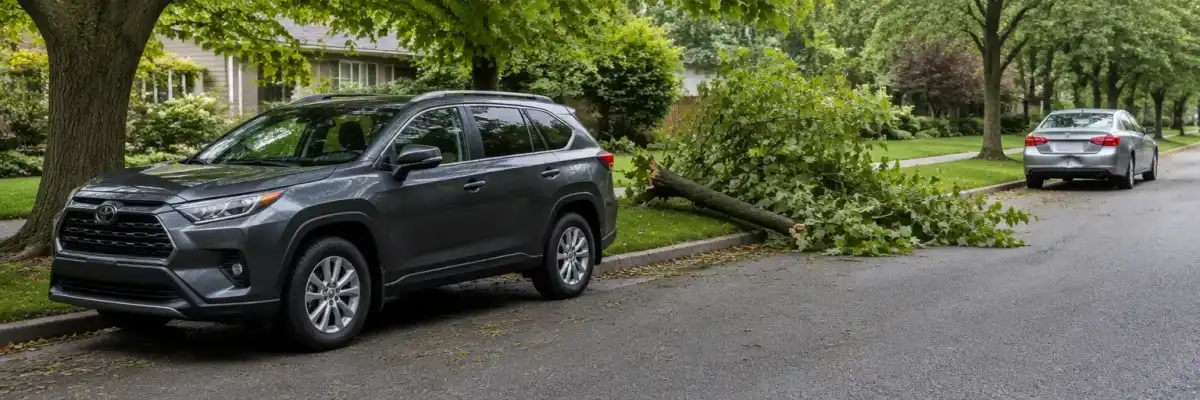
Comprehensive vs. Collision Insurance: What’s the Difference?
At a glance
- Collision: pays for damage when your car hits another vehicle or object — regardless of fault.
- Comprehensive: pays for non-crash events like theft, vandalism, hail, flood, fire, animal strikes, and falling objects.
- Typical deductibles: collision $250–$1,000; comprehensive $100–$1,000. One deductible per claim.
- Cost: collision is usually the pricier of the two because crash claims are more frequent.
- When required: lenders and lessors almost always require both on financed or leased vehicles.
Key Takeaways
- Collision insurance pays to repair or replace your car after a crash, regardless of who is at fault.
- Comprehensive insurance covers non-crash events like theft, hail, flooding, vandalism, and animal strikes.
- Most lenders and lessors require both coverages on financed or leased vehicles.
- Each coverage has its own deductible, and only one applies per claim depending on the cause of the damage.
- Comprehensive is typically less expensive than collision because crash-related claims tend to be more frequent and costly.
Introduction
If you have ever shopped for car insurance beyond the state minimum, you have probably seen collision and comprehensive listed as optional coverages. Together with liability, these two coverages make up what most people call full coverage auto insurance. While they are often bundled together, collision and comprehensive protect you in very different situations.
Understanding what each one covers, and when you actually need them, can help you avoid paying for protection you do not need or going without coverage that could save you thousands after an unexpected loss. This guide breaks down both coverages side by side so you can make a confident decision.
What Collision Insurance Covers
Collision insurance pays to repair or replace your vehicle when it is damaged in a crash, regardless of who caused the accident. If your car is totaled, the insurer pays the actual cash value of the vehicle minus your deductible.
Collision coverage applies when your vehicle is damaged by:
- Crashing into another vehicle, whether you are at fault or not
- Single-vehicle accidents, such as running off the road or rolling over
- Hitting a stationary object like a guardrail, fence, post, or tree
- Pothole damage in some cases, depending on the insurer and the extent of damage
Collision does not cover mechanical breakdowns, routine wear, or damage from events like weather and theft. Those fall under comprehensive.
What Comprehensive Insurance Covers
Comprehensive insurance covers damage to your vehicle from events other than collisions. It is sometimes called “other than collision” coverage on policy documents.
Comprehensive coverage applies when your vehicle is damaged by:
- Theft of the entire vehicle or parts (catalytic converters, wheels)
- Vandalism, including keying, broken windows, or graffiti
- Weather events such as hail, flooding, tornadoes, hurricanes, and fallen trees or branches
- Animal strikes, including hitting a deer or other wildlife
- Fire, whether from an engine fire, arson, or a nearby wildfire
- Falling objects like tree limbs, rocks, or debris
- Glass breakage, including cracked or shattered windshields
- Civil disturbance, including riots or protests that damage your vehicle
Comprehensive does not cover collision damage, mechanical failure, or personal belongings stolen from inside the car (your renters or homeowners policy may cover personal property).
Side-by-Side Comparison
| Feature | Collision | Comprehensive |
|---|---|---|
| What it pays for | Damage from crashes with vehicles or objects | Damage from non-crash events (theft, weather, animals, vandalism) |
| When it applies | Your car hits something or is hit by another vehicle | Something happens to your car that is not a collision |
| Typical deductible range | $250 to $1,000 | $100 to $1,000 |
| Average annual cost | Higher (crash claims are more frequent and costly) | Lower (non-crash claims are less common on average) |
| Required for financed cars? | Yes, nearly always required by the lender | Yes, nearly always required by the lender |
| Fault requirement | Pays regardless of fault | Not fault-based (covers events outside your control) |
When You Need Both
Carrying both collision and comprehensive coverage makes sense when the cost of losing your vehicle would create a serious financial hardship. Common situations where you should have both include:
- You finance or lease your vehicle. Your lender or leasing company will almost certainly require both coverages as a condition of the loan. If you also owe more than your car is worth, consider adding gap insurance to cover the difference.
- You drive a newer car. Vehicles that are only a few years old still hold significant value, and the cost of replacing one out of pocket can be substantial.
- You cannot afford to replace your car with savings. If losing your vehicle would mean going without transportation or taking on debt, both coverages provide important financial protection.
- You drive for rideshare or delivery. Standard personal auto policies exclude driving for pay under the livery clause, which can void both collision and comprehensive during the periods you are logged into an app. A rideshare or delivery endorsement (or a commercial auto policy) preserves physical-damage coverage while you are on the clock.
When You Might Drop One or Both
There are situations where carrying collision, comprehensive, or both may no longer be worth the cost:
- Your car’s market value is low. A common guideline is to consider dropping these coverages when the annual premium exceeds 10% of your car’s current value. If your car is worth $3,000 and you are paying $400 a year for collision and comprehensive combined, the math may not work in your favor.
- You drive an older vehicle. As cars age, their value decreases, but premiums for physical damage coverage do not always drop at the same rate.
- You have enough savings to replace the car. If you could comfortably buy a replacement vehicle without insurance proceeds, you may choose to self-insure against these risks.
Keep in mind that even if you drop collision, you may still want to keep comprehensive. It is less expensive, and events like theft and hail can happen to any car regardless of age. To learn more about how much auto insurance you actually need, review your full coverage options before making changes.
Cost Factors
Several factors influence what you will pay for collision and comprehensive coverage:
- Deductible choice. A higher deductible lowers your premium but increases your out-of-pocket cost when you file a claim. A lower deductible does the opposite.
- Vehicle age and value. Newer, more expensive cars cost more to insure because the potential payout is higher.
- Location. Where you live and park your car affects both coverages. Urban areas tend to have higher comprehensive rates (more theft and vandalism) and higher collision rates (more traffic).
- Driving history. A clean driving record generally means lower collision premiums. Comprehensive rates are less affected by your driving habits since the covered events are mostly outside your control.
- Claims history. Filing previous claims, especially collision claims, can increase your rates at renewal.
You can explore all the factors that affect your rate in our guide on auto insurance coverage types.
How Deductibles Work for Each
Both collision and comprehensive have separate deductibles, and you choose each one independently when you set up your policy. Your deductible is the amount you pay out of pocket before your insurance covers the rest.
Here is how it works in practice:
- If you hit a guardrail and cause $4,000 in damage to your car, your collision deductible applies. With a $500 deductible, you pay $500 and your insurer pays $3,500.
- If a hailstorm damages your car and repairs cost $2,500, your comprehensive deductible applies. With a $250 deductible, you pay $250 and your insurer pays $2,250.
Only one deductible applies per claim. The type of event determines which one. You never pay both deductibles for a single incident.
Some insurers offer a $0 deductible for comprehensive glass claims (windshield repair or replacement), which can be especially valuable in states where rock chips and road debris are common.
Frequently asked questions
Can I have comprehensive without collision?
Yes. Most insurers allow you to carry comprehensive without collision. This is a common choice for owners of older vehicles who want protection against theft, weather, and animal strikes but do not want to pay the higher cost of collision coverage. However, most insurers will not let you carry collision without comprehensive.
Does comprehensive cover me hitting a deer?
Yes. Hitting an animal, including a deer, is covered under comprehensive insurance, not collision. This is one of the most common comprehensive claims in rural and suburban areas.
Should I drop collision on an old car?
It depends on your car’s current market value and your financial situation. If the annual cost of collision coverage is more than 10% of what your car is worth, dropping it may make sense, especially if you have savings to cover a replacement. Use your car’s current market value, not what you originally paid, to make this comparison.
Is comprehensive or collision more expensive?
Collision insurance is typically more expensive. Crash-related claims happen more often and tend to involve higher repair costs. Comprehensive premiums are generally lower, though they can be elevated in areas prone to severe weather, theft, or animal strikes.
Next Steps
- Review your current policy. Check whether you already carry both coverages by reading your declarations page.
- Evaluate your car’s value. Look up your vehicle’s current market value to determine whether collision and comprehensive are still cost-effective.
- Adjust your deductibles. Raising your deductible can lower your premium if you are comfortable with a higher out-of-pocket cost per claim.
- Compare quotes. Rates vary significantly between insurers. Get quotes from multiple companies to find the best price for the coverage you need. Our guide to comparing insurance quotes can help.
- Talk to your lender. If you are financing or leasing, confirm exactly what coverages your lender requires before making changes.