2026-04-16 · home, manufactured, mobile, coverage
Mobile and Manufactured Home Insurance: How It Differs From a Standard Homeowners Policy
If you own a manufactured or mobile home, a standard HO-3 homeowners insurance policy does not apply. Insurers write manufactured housing on a different policy form, most commonly an HO-7 for newer manufactured homes or a dedicated mobile-home form for older units built before the 1976 HUD code took effect. The coverage structure looks similar to a standard homeowners policy on the surface, but limits, valuations, and available endorsements are tailored to the way manufactured homes are built, transported, and sited.
Understanding the differences matters because manufactured homes are constructed in a factory and transported to a site rather than built on a permanent foundation, and that distinction affects everything from how insurers calculate replacement cost to which perils they are willing to cover. Roughly 22 million Americans live in manufactured housing, and many first-time buyers are surprised to learn that their coverage options and pricing work differently from site-built homes.
Key takeaways
- A standard HO-3 homeowners policy does not cover manufactured or mobile homes. You need an HO-7 or a dedicated mobile-home policy instead.
- Coverage typically includes dwelling, other structures, personal property, liability, medical payments, and loss of use, but limits and valuations may differ from site-built home policies.
- Older mobile homes built before the 1976 HUD code can be harder to insure and may have fewer carrier options.
- Cost drivers include the age of the home, whether it sits in a park or on owned land, tie-down and anchoring systems, and local wind zone ratings.
Why manufactured homes use a different policy form
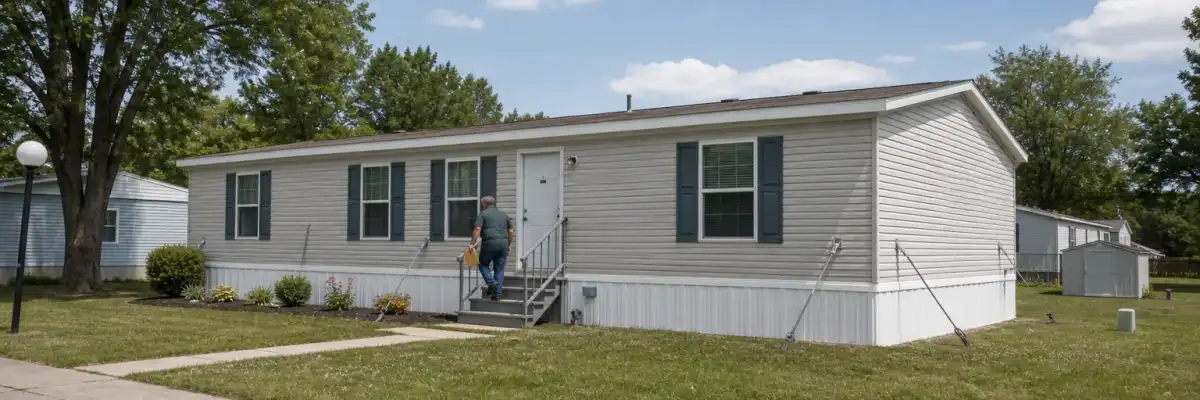
Manufactured homes are built entirely in a factory under federal HUD building standards rather than local building codes. They arrive at the site in one or more sections (single-wide, double-wide, or triple-wide) and are placed on a temporary or permanent foundation. This construction method creates different risk factors for insurers.
Replacement cost calculations differ because the home depreciates faster than a site-built structure, and rebuilding a manufactured home after a total loss involves ordering and transporting a new unit rather than hiring local contractors to frame a house on-site. Insurers also consider the anchoring system, because a manufactured home that is not properly tied down is more vulnerable to wind damage.
Homes built before June 15, 1976, when the HUD Manufactured Home Construction and Safety Standards took effect, were built to weaker or inconsistent standards. These older units, sometimes called “mobile homes” under the pre-HUD definition, face narrower carrier availability and may only qualify for actual cash value coverage rather than replacement cost.
What a mobile/manufactured home policy typically covers
A manufactured home policy generally provides the same categories of coverage as a standard homeowners policy, though the limits and settlement methods may differ.
- Dwelling (structure): pays to repair or replace the manufactured home itself, including its built-in systems, fixtures, and attached components.
- Other structures: covers detached structures on the property such as sheds, carports, and storage buildings.
- Personal property: covers furniture, clothing, electronics, and other belongings inside the home. Replacement cost vs. actual cash value matters here because actual cash value is much more common on older manufactured home policies, meaning payouts are reduced for depreciation.
- Liability: protects you if someone is injured on your property or if you cause damage to someone else’s property.
- Medical payments: covers minor medical expenses for guests injured on your property, regardless of fault.
- Loss of use: pays temporary living expenses if the home is uninhabitable after a covered loss.
Not everything is covered. Review our guide on what homeowners insurance does not cover for exclusions that also apply to manufactured home policies, including wear and tear, neglect, and certain water damage scenarios.
Common exclusions and add-ons
Like any property policy, a manufactured home policy has exclusions you should review before purchasing.
- Flood damage: almost always excluded and requires a separate flood insurance policy, whether the home is in a park or on owned land.
- Earthquake damage: excluded on standard policies. If you live in a seismically active area, you need a separate earthquake insurance policy.
- Trip/transit coverage: if the home is being relocated, damage during transport is not covered by a standard policy. A separate transit endorsement or moving policy is needed.
- Skirting and underpinning: the panels that enclose the space beneath the home may not be covered unless you add an endorsement.
- Tie-down and anchoring systems: damage to or failure of the anchoring system itself may be excluded, though the resulting damage to the home from wind may be covered.
- Awnings and attached structures: some policies limit or exclude coverage for awnings, porches, or decks that were added after the home was placed.
Ask your insurer specifically about each of these items when comparing quotes.
Cost drivers specific to manufactured homes
Several factors influence what you will pay for manufactured home insurance. Understanding them helps you compare quotes more effectively. For a broader look at what drives premiums across all policy types, see our guide on insurance cost drivers.
- Age of the home: older homes cost more to insure because they are more likely to have outdated wiring, plumbing, and structural components.
- HUD-code compliance: homes built after June 15, 1976, under the federal HUD code are generally easier and cheaper to insure.
- Single-wide vs. double-wide vs. triple-wide: wider homes have higher replacement costs and a larger footprint to cover.
- Tie-downs and anchoring: properly anchored homes receive better rates because they are more resistant to wind damage.
- Park vs. owned land: homes sited in parks may have different risk profiles and coverage requirements than homes on private land.
- Wind zone rating: manufactured homes are rated for one of three HUD wind zones. Homes in higher wind zones (coastal and high-wind areas) face higher premiums.
- Distance to fire department: rural properties farther from a fire station typically cost more to insure.
- Prior claim history: a history of claims on the property or from the policyholder can increase rates.
In a park vs. on your own land
Where your manufactured home sits affects both your coverage needs and your lender requirements.
In a park (lot-leased). When you own the home but lease the lot in a manufactured home community, your policy covers the structure and your belongings but not the land beneath it. The park owner typically carries liability coverage for common areas, but you are responsible for insuring your own unit. Some lenders that finance mobile homes in parks require specific coverage amounts and may require the policy to name the lender as an additional interest.
On owned land. When you own both the home and the land, coverage works more like a traditional homeowners policy. Lenders generally require dwelling coverage that matches the loan amount, and you may want higher liability limits since you are responsible for the entire property. Homes on permanent foundations that are titled as real property rather than personal property may qualify for broader coverage options and sometimes better rates.
FAQs
Q: Can I use a standard homeowners policy on a manufactured home? A: No. Standard HO-3 homeowners policies are designed for site-built homes. Manufactured and mobile homes require an HO-7 policy or a dedicated mobile-home policy that accounts for differences in construction, foundation type, and replacement cost.
Q: Does insurance cover the home while it is being moved? A: A standard manufactured home policy does not cover damage during transport. If you are relocating the home, you need a separate transit endorsement or a policy from the moving company that covers damage in transit.
Q: Is flood damage covered? A: No. Flood damage is excluded from manufactured home policies just as it is excluded from standard homeowners policies. You need a separate flood insurance policy whether your home is in a park or on owned land.
Q: Does my lender require manufactured home insurance? A: Most lenders that finance manufactured homes require dwelling coverage at minimum, and if the home is in a FEMA-designated flood zone, a flood policy is also required. The lender will typically specify minimum coverage amounts and require being listed on the policy.
Next steps
- Start by checking whether your home was built before or after June 15, 1976, to determine HUD-code compliance. This date significantly affects your coverage options and pricing.
- Get quotes from at least two or three insurers that specialize in manufactured home coverage. Use our guide on how to compare insurance quotes to evaluate them side by side.
- Review your dwelling limit carefully. Make sure it reflects the actual cost to replace the home, not its market or trade-in value. Our guide on how much home insurance do I need walks you through the process.
Sources
- National Association of Insurance Commissioners (NAIC), naic.org
- Insurance Information Institute (III), iii.org
- U.S. Department of Housing and Urban Development (HUD), Manufactured Housing Program, hud.gov
- Federal Emergency Management Agency (FEMA), fema.gov